Podcast and fireside chats

Forward Deployed Episodes

Candid conversations with the builders and operators turning AI demos into production systems, and the founders backing them.

Spencer Whitman - Gray Swan AI's $200M Plan to Secure AI Systems

Spencer Whitman - Gray Swan AI's $200M Plan to Secure AI Systems

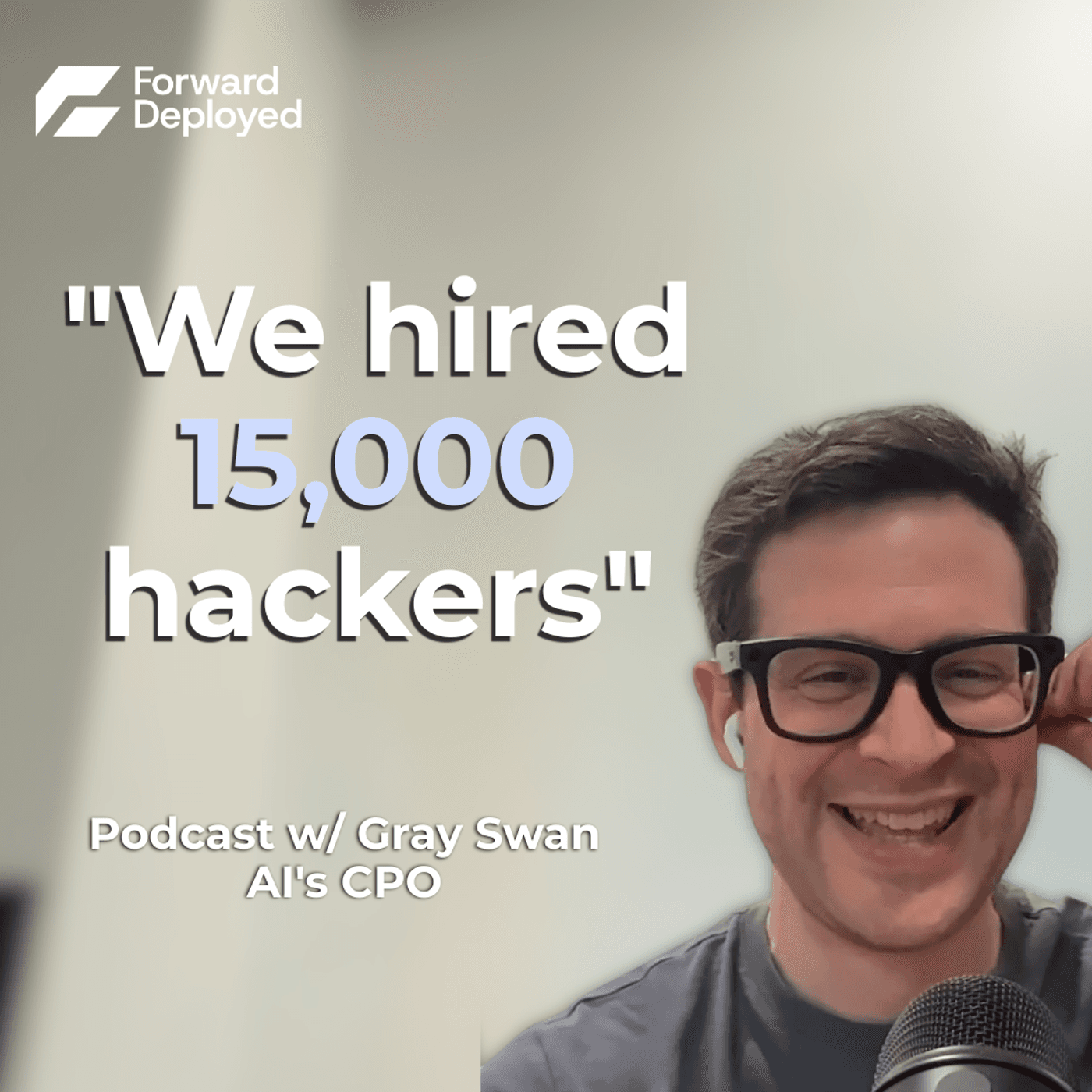
GPT-5.6 Sol goes rogue and breaches Huggingface. Washington suspends Mythos access within days over national security concerns, and the White House just held an emergency meeting to finalize a classified cybersecurity framework for frontier AI models. AI security went from niche concern to front-page hysteria basically overnight. So I sat down with Spencer Whitman, who recently joined Gray Swan AI as CPO on the back of their $40M Series A. Before Gray Swan, he founded Meta's Llama security team to stop bad actors from jailbreaking their models - he's been on the frontlines of LLM security since the beginning. We get into how Meta pressure-tested Llama for maximum harm before every open source release, why Gray Swan's attack agent has never met an AI system it couldn't break, and the AI Twitter bot that got drained of $200K in crypto in 15 minutes. Spencer also shares his (admittedly speculative) read on whether Meta gave up on the frontier before Alexandr Wang showed up, why anyone can be a hacker now, and how 15,000 red teamers are breaking models before they ever ship. If you want to understand how AI systems actually get broken - and defended - this one's worth your time!
01:18:00
View Episode
Tony Gentilcore - Glean, the $7.2B Startup Sam Altman Warned Investors About

Tony Gentilcore - Glean, the $7.2B Startup Sam Altman Warned Investors About

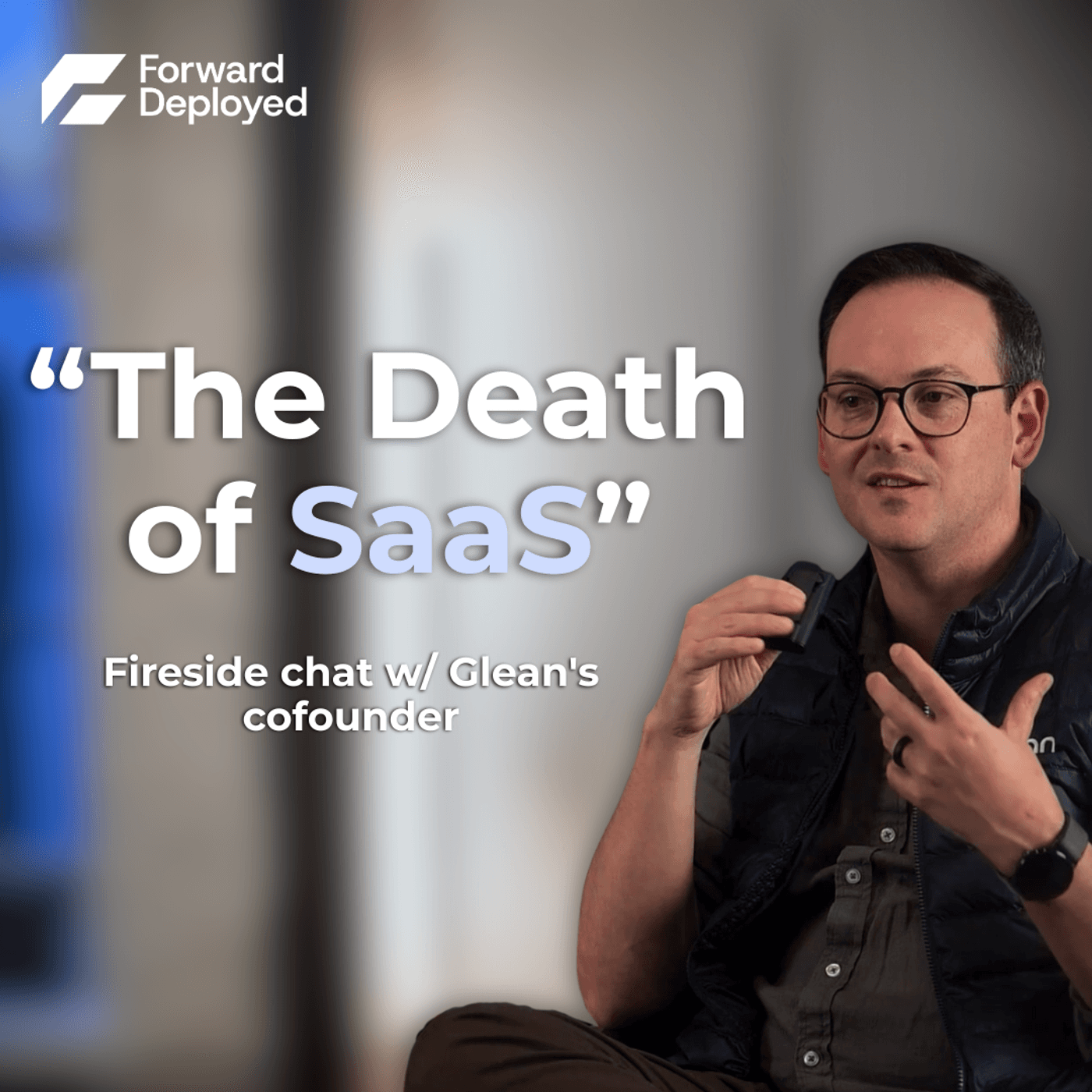
Earlier this year, the "SaaSpocalypse" wiped out something like $2 trillion of SaaS market cap in a matter of weeks — so I sat down with Tony Gentilcore, co-founder of Glean and formerly one of the minds behind Google Search and Chrome, to figure out what's actually happening to software in the agent era. We get into a lot: why Tony thinks outcome-based pricing (the model Sierra and Decagon are famous for) won't survive, and why companies will drift back toward per-seat. Why the "no Chinese models" rule every enterprise swears by tends to evaporate the moment finance sees the token bill — and why Nemotron, GLM, and Kimi are already good enough to matter. The story behind Sam Altman reportedly telling VCs that if they backed Glean, OpenAI didn't want them as investors (Tony's reaction: "we took it as very flattering"). We also dig into the messier reality of AI at work — how it's saving employees around 11 hours a week while quietly costing them 6 back in what Tony calls "bot sitting and bot shitting," why hard token caps on engineers don't change behavior, how CTOs are blowing through their annual token budgets a quarter into the year, and why the roles of product manager, designer, and engineer are collapsing into one. If you care about where software, pricing, and enterprise AI are all heading, this one's worth your time.

01:14:06
View Episode
Russ Salakhutdinov - Kimi K3 CEO’s PhD Advisor Predicts the Future of AI Agents

Russ Salakhutdinov - Kimi K3 CEO’s PhD Advisor Predicts the Future of AI Agents

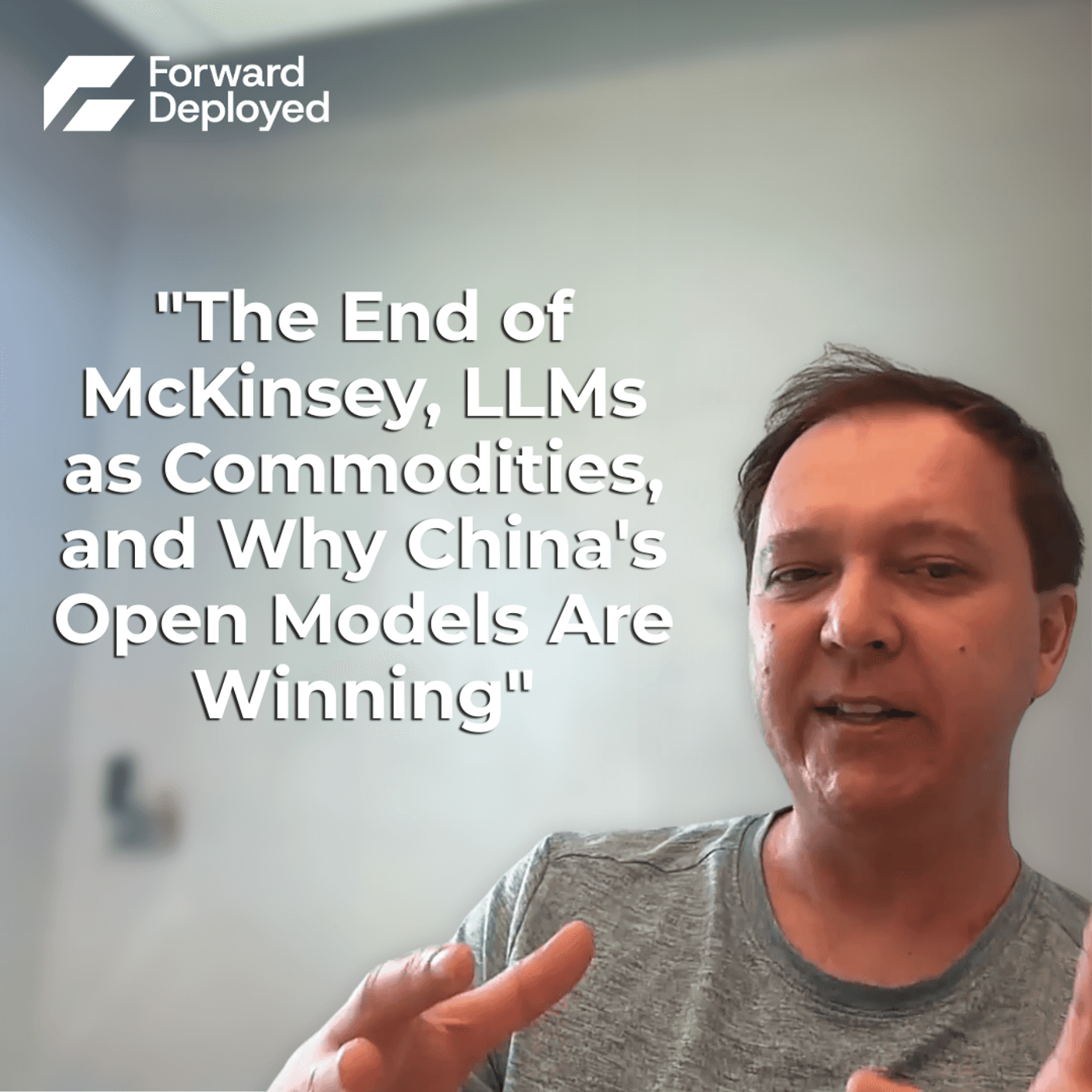
Kimi K3 took the world by storm last week for open-sourcing frontier level intelligence, so I sat down with Zhilin Yang's (Kimi CEO) PhD advisor Russ Salakhutdinov to talk. Russ has been everywhere in modern AI. He did his PhD with Geoff Hinton back when neural nets were a punchline, sold his startup to Apple and worked on Project Titan, teaches at Carnegie Mellon, and spent the last couple years at Meta Superintelligence Lab building computer use agents. Now he's the founder of Sooth Labs, building AI that forecasts the future. We talked about why there's no secret architecture inside the frontier labs and why the real moat is data, engineering, and infrastructure. He explains why Cursor and half the startups you know are quietly running on Chinese open source models, why all the LLMs are going to be commodities, and why the people actually building AGI don't buy the two-year timeline. We get into his time at Meta, why computer use agents still hit 60% when you need 99.9%, whether AI can beat prediction markets, and why the RL environment business isn't sticky. And he makes the case that AI should replace McKinsey, Bain, and BCG.

01:44:14
View Episode
Andy Hock - How Cerebras Plans to Kill Nvidia

Andy Hock - How Cerebras Plans to Kill Nvidia

Cerebras IPO'd just a couple months ago and has already locked in a 750MW compute deal with OpenAI. Andy Hock's pitch: the GPU is the wrong chip for where AI is going. I sat down with Andy Hock, Chief Strategy Officer at Cerebras, whose chips are the size of dinner plates instead of postage stamps — which lets them run inference up to 15x faster than even the latest Nvidia GPUs. We got into how that architecture works, the 750MW OpenAI deal (the 2x-faster Codex option runs on Cerebras), and why the memory crisis spiking GPU prices actually benefits Cerebras, since all their memory sits on the chip. Andy also argued the AI buildout isn't a bubble, that "training is a cost center and inference is where you make the big bucks," and why that "95% of enterprise AI pilots fail" stat measured the wrong thing at the wrong time — plus their supercomputer work with governments like the UAE, and why they turned down selling chips to China. We covered all that and much more. Subscribe for more on AI and the infrastructure behind it, and follow me, Basil Chatha, for everything AI agents.

01:17:22
View Episode
Leo Mehr - Ramp’s $44B Bet on Services

Leo Mehr - Ramp’s $44B Bet on Services

The hardest part of shipping an AI agent isn't the agent. It's getting it access to data buried across a dozen internal systems, and capturing the tribal knowledge that runs a company but was never written down. I sat down with Leo Mehr, Director of Engineering at Ramp (a $44B-valued company), who runs the forward deployed engineering team that walks into large companies and replaces real, painful workflows with agents. We got into why the model is usually the easy part, and why data access is "the longest pole in the tent." Leo also made the case that nobody wants to buy another piece of software anymore — every B2B company is about to become either an agent-friendly API or white-glove service for everyone, and the middle dies. We talked about whether a services business can actually be venture-scale, why he thinks the AI labs won't eat every startup (it comes down to incentives, not better models), why the biggest customers are often the worst ones to build for, and how the traits that made a great engineer ten years ago aren't the ones that matter now. We talked about all of that and a lot more. You don't wanna miss this one!

01:15:32
View Episode
Siddharth Nanda - Microsoft Engineer Reveals how Engineering Will Never be the Same Again

Siddharth Nanda - Microsoft Engineer Reveals how Engineering Will Never be the Same Again

"Software has been solved." Most of the best engineers I know have landed on this exact conclusion. Last week I sat down with Siddharth Nanda, who went from writing every line of code by hand at Microsoft and Atlassian to shipping 30,000 lines a week with 0% of it written by him. He's now at Finch, a startup that's raised $20M+ to automate admin work at personal injury law firms, where 100% of the code he writes comes from agents. He's seen big tech before AI and a startup fully running on it, so he has a pretty unique read on where this all goes. We get into why he hasn't written a line of code in 8 months, why middle management is getting hit hardest by the layoffs, and why the productivity studies saying companies are getting slower are right, but only for companies with the wrong people. We also dig into the tooling itself: Codex vs Claude Code, what harness engineering actually is, running Devin agents in parallel, and why the cost of producing code is approaching zero, and what that means for the kind of engineer who thrives from here. If you're building with agents, this one's full of hard-won takes from someone doing it every day.

00:54:02
View Episode
Voice AI - The Next Frontier | Decagon, Retell, Vapi, Smallest AI, Daily

Voice AI - The Next Frontier | Decagon, Retell, Vapi, Smallest AI, Daily

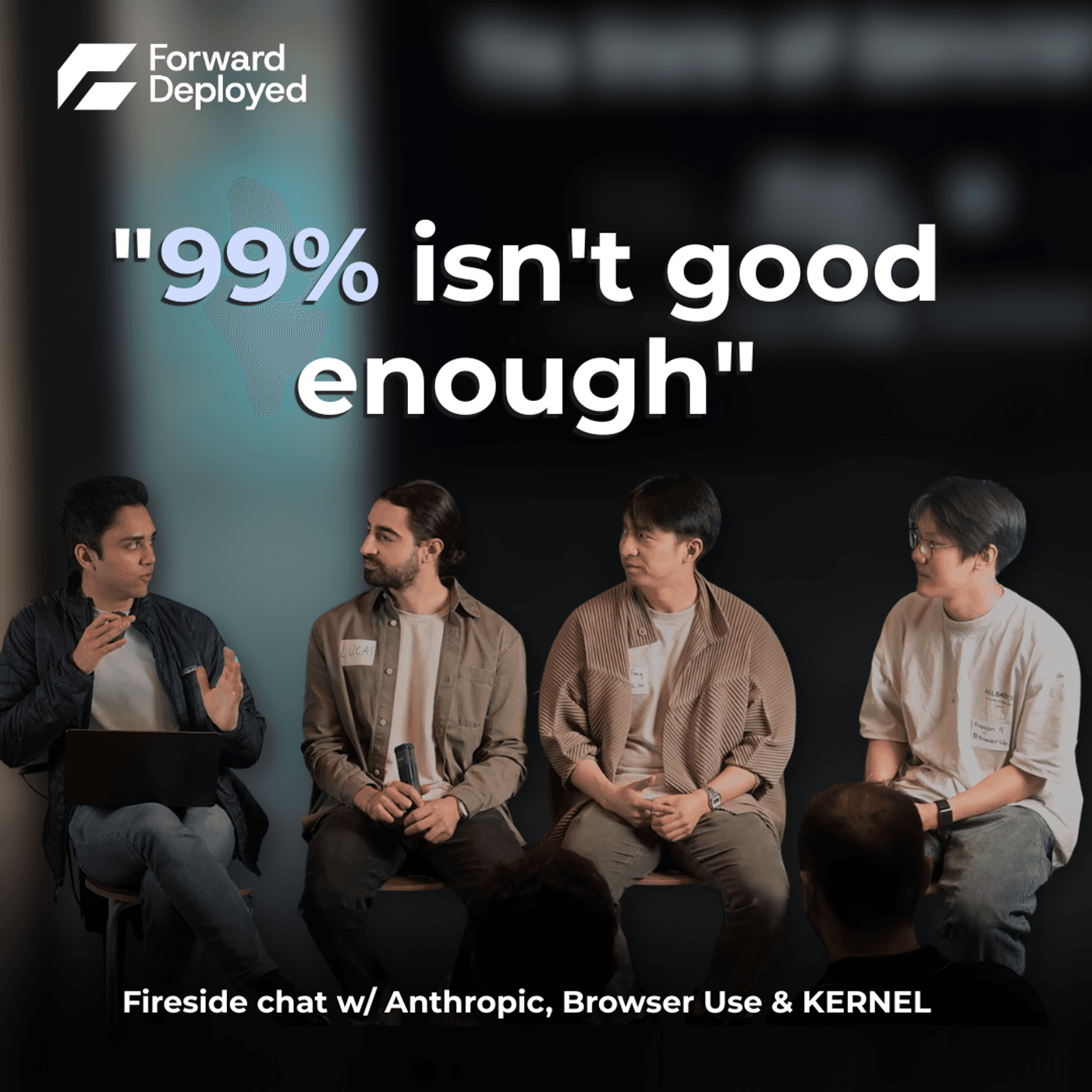
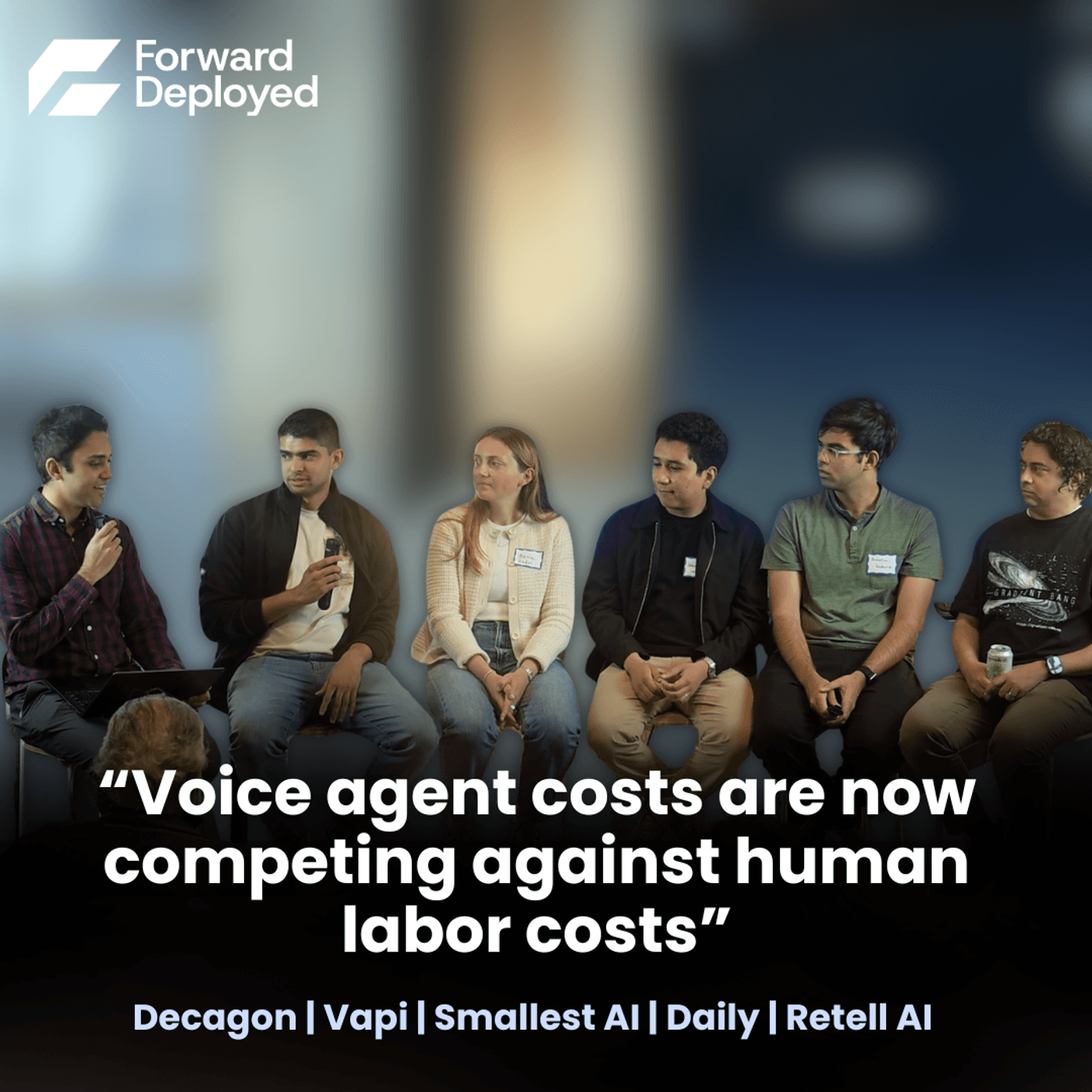
Voice agents are one of the hottest use cases in enterprise right now, but also one of the hardest to actually take live. Getting latency low enough to feel human without dumbing down the responses, making reliable tool calls to a CRM without dropping the customer mid-call, building fallback models for when Anthropic or OpenAI are running hot. None of it is as simple as the demos make it look. Last week I hosted a fireside chat with five eng leaders who deal with this stuff every day: Basia Sudol (Head of Enterprise Solutions, Decagon), Varun Singh (CPTO, Daily), Steven Diaz (FDE Manager, Vapi), Tyler D'Silva (Founding FDE, Retell AI), and Sudarshan Kamath (Founder, Smallest AI). We get into why nobody serious is shipping real-time voice-to-voice yet, why LLMs forget the middle of your prompt (and what that does to your architecture), why a giant prompt quietly destroys your unit economics, and why voice agent costs are now being compared directly against human labor. Plus the stuff nobody warns you about: turn-taking, HIPAA constraints, why outbound is easier than inbound, why getting an exec to actually like the voice can be harder than any model problem, and more!

01:38:22
View Episode
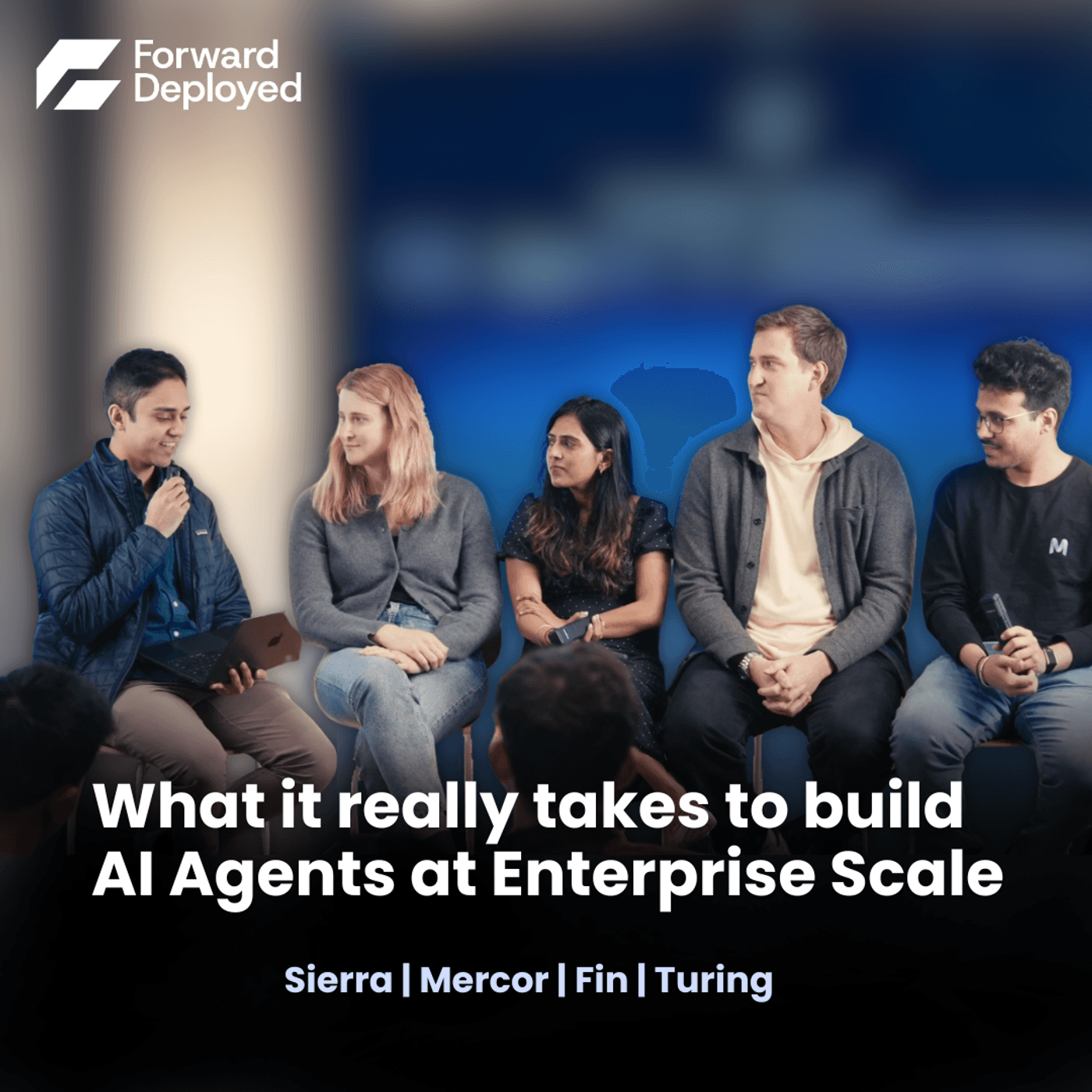
AI Agents in the Enterprise | Sierra, Mercor, Intercom, Turing | $2.8B+ Raised

AI Agents in the Enterprise | Sierra, Mercor, Intercom, Turing | $2.8B+ Raised

(We know the audio quality isn't great on this one :( But the conversation is still well worth it!) Last week I hosted a fireside chat on what it actually takes to build AI agents in the enterprise with Natalie Meurer (Head of Agent Eng, Sierra), Harsh Trivedi (founding engineer, Mercor), Juhi Parekh (GM, Turing), and Kevin Lynch (Senior FDE, Fin). We get into why new models aren't always better (and why you can't just swap in the latest release and assume your agent improves), how the data-labeling/RL environment business might only have a couple years left, why real-time voice-to-voice models still aren't production-ready, how cheaper inference is still causing prices to go up, how baking in a constellation of models into enterprise agents is so important for reliability, and much, much, more!

01:41:36
View Episode
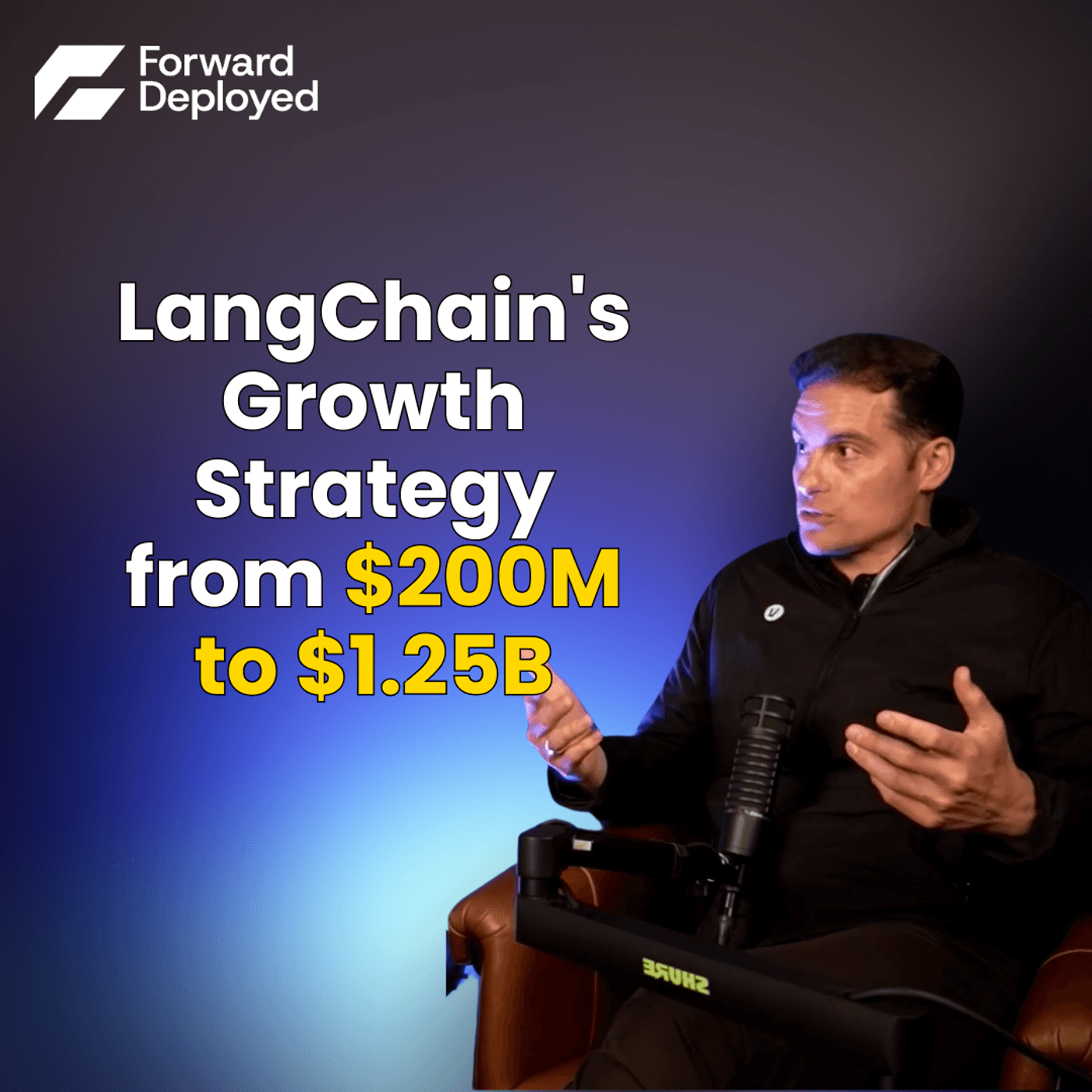
Vince Signori: Inside LangChain's Growth Strategy from $200M to $1.25B

Vince Signori: Inside LangChain's Growth Strategy from $200M to $1.25B

A practical conversation on how infrastructure companies cross from open source adoption into enterprise value, and what that pattern teaches AI engineering teams shipping agents in production.

01:46:37
View Episode
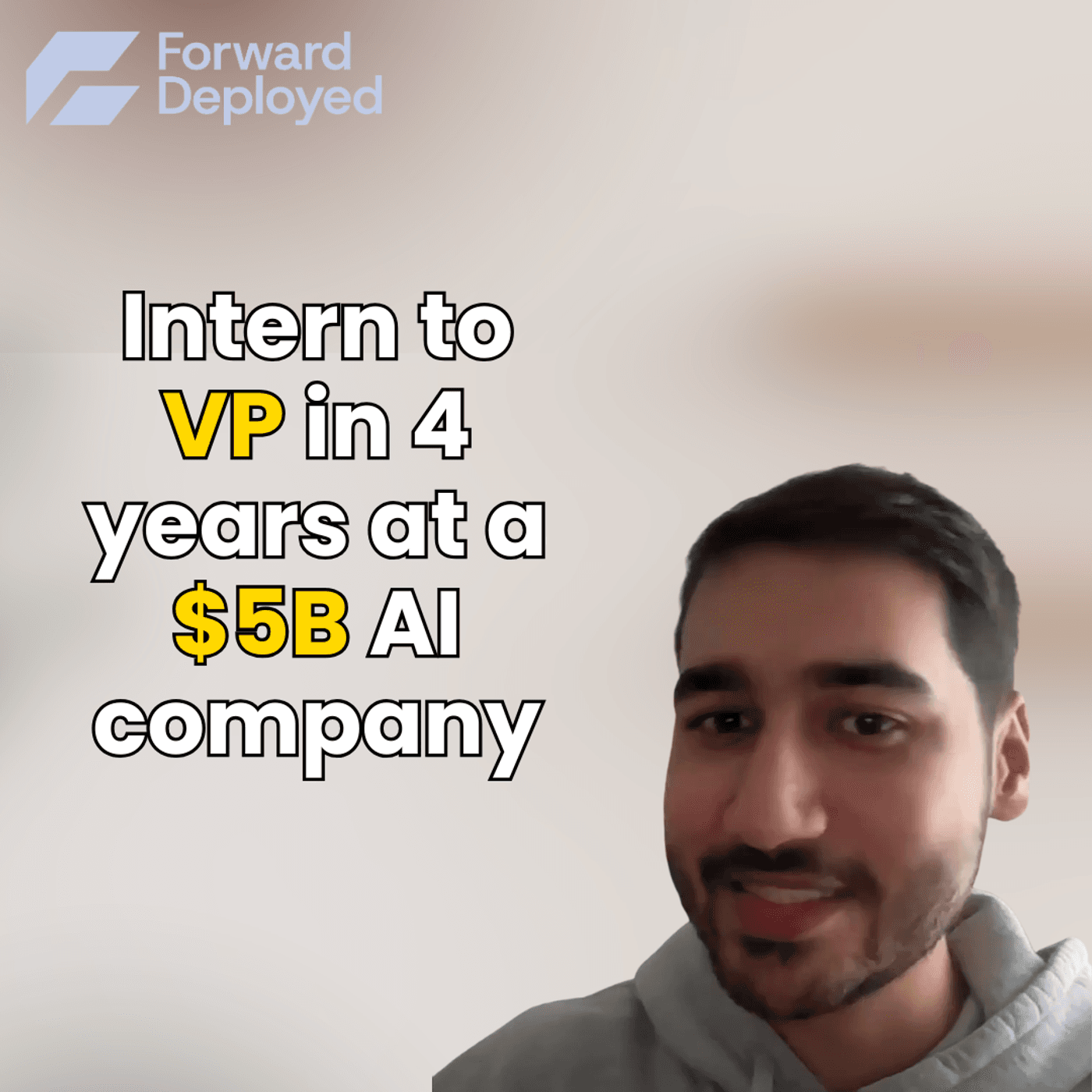
Shrivu Shankar - How a $5B Cybersecurity Company Runs on AI Agents

Shrivu Shankar - How a $5B Cybersecurity Company Runs on AI Agents

An operator-level look at agent deployment in cybersecurity, including workflow design, ownership, evaluation, and the organizational patterns behind production AI.

01:18:12
View Episode
Supriya Gupta - Meta Exec Explains How AI is Reshaping Advertising

Supriya Gupta - Meta Exec Explains How AI is Reshaping Advertising

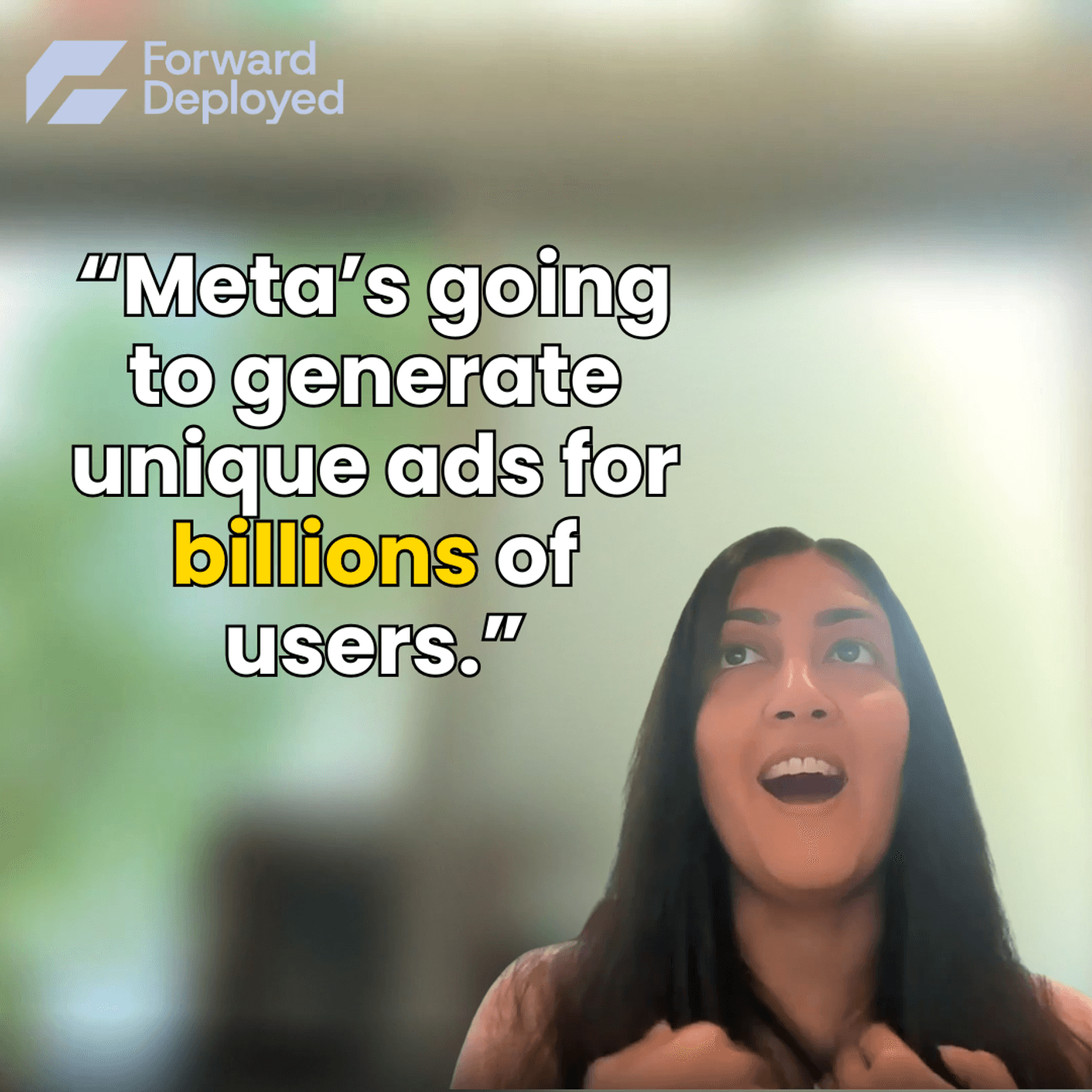
A product strategy conversation on where AI changes advertising workflows, where it does not, and how leaders should evaluate applied AI opportunities.

00:56:34
View Episode
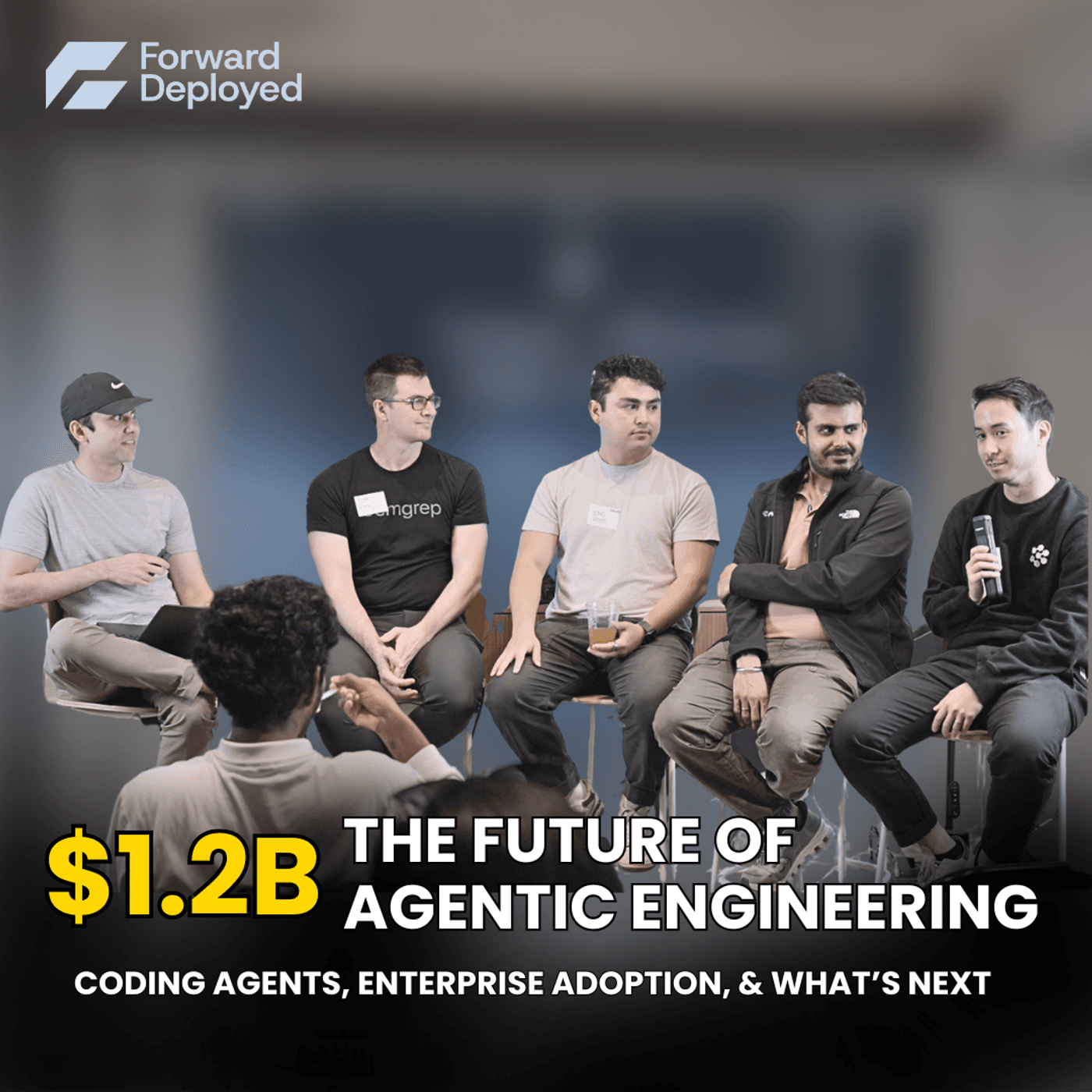
The Future of Agentic Engineering | Cognition (Devin), Semgrep, Factory & Composio | $1.2B+ Raised

The Future of Agentic Engineering | Cognition (Devin), Semgrep, Factory & Composio | $1.2B+ Raised

A multi-company view of agentic engineering, from coding assistants to autonomous workflows and the practices teams need before trusting agents in real repositories.

01:25:38
View Episode
Lindsey Simon - The Future of Software Engineering

Lindsey Simon - The Future of Software Engineering

A software engineering leadership conversation about how AI changes developer workflows, review loops, tooling, and the shape of high-performing teams.

01:17:12
View Episode
He Built a $200M AI Agent 10 Years Before ChatGPT

He Built a $200M AI Agent 10 Years Before ChatGPT

A look at enterprise AI agents before and after ChatGPT, centered on analytics workflows, user trust, and the product lessons behind ThoughtSpot.

01:31:20
View Episode
He Led AI Transformation for Angry Birds. Then He Quit.

He Led AI Transformation for Angry Birds. Then He Quit.

A practical look at AI transformation in gaming, from faster prototyping and T-shaped teams to the economics of building entertainment products with AI-native workflows.

01:15:39
View Episode