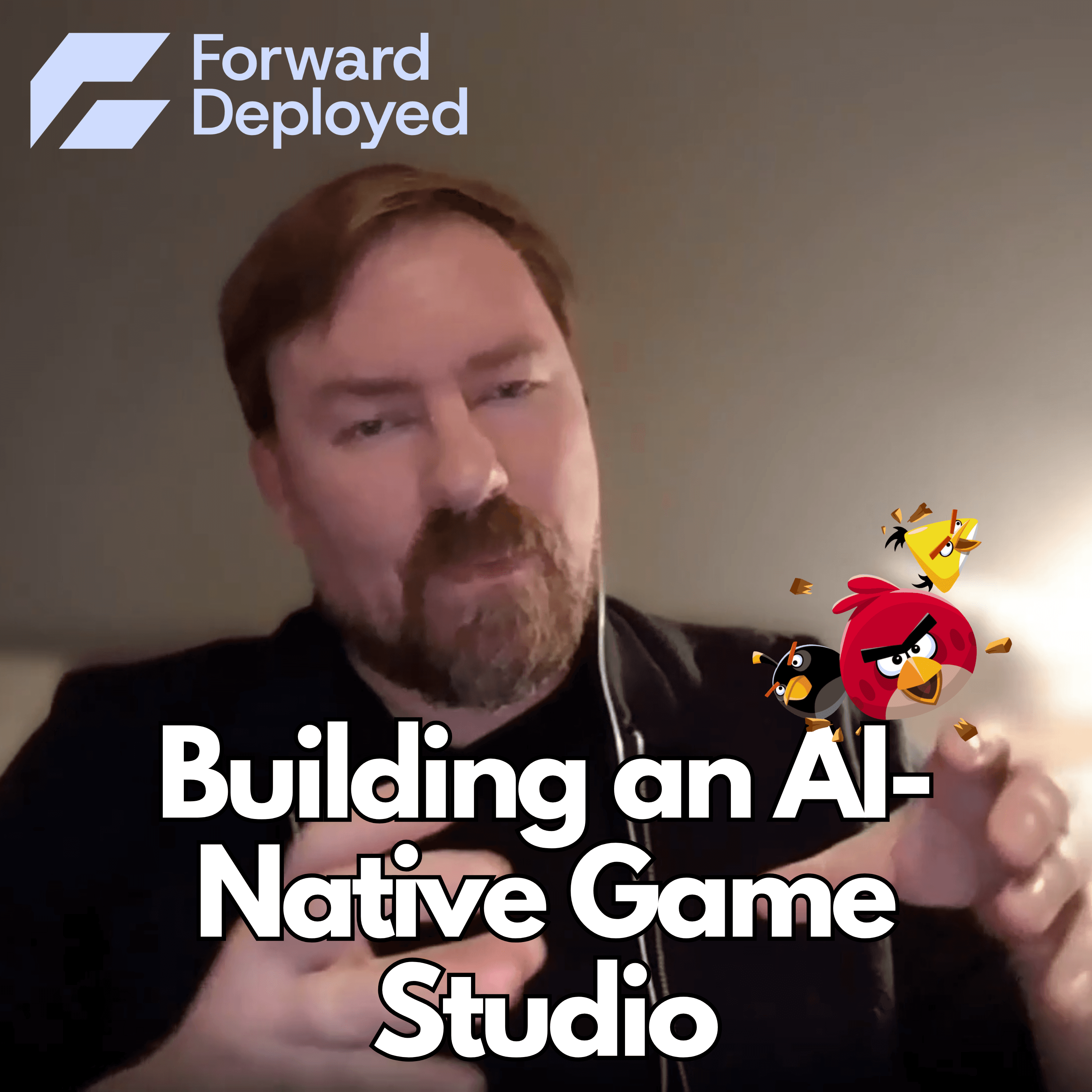
What this episode covers
A practical look at AI transformation in gaming, from faster prototyping and T-shaped teams to the economics of building entertainment products with AI-native workflows.
Why this matters in practice
Faster prototyping only becomes transformation when teams also change adoption, ownership, incentives, and the path from feedback to launch.
Chapters
- 00:00The Evolution of Game Development with AI
- 03:07From Web Design to Gaming: A Career Journey
- 05:50The Impact of AI on Knowledge Work
- 09:07The Changing Landscape of Game Development
- 11:53Organizational Inertia and the Future of Gaming Companies
- 14:55The Role of AI in Transforming Game Development
- 17:57Navigating the Challenges of AI Adoption
- 21:08The Future of Game Development Methodologies
- 23:46The Role of Product Managers in an AI-Driven World
- 26:47Marketing Strategies in the Gaming Industry
- 29:59The Role of Publishers in Game Development
- 33:05The Future of User Acquisition in Gaming
- 36:02The Changing Economics of Game Development
- 38:56The Future of Software Development
- 42:13The Role of Novelty in Game Development
- 45:04The Importance of Familiarity in a Saturated Market
- 48:12The Future of Fast Entertainment
- 50:59Leveraging Licensing for Success
- 54:02The Journey from Rovio to AI Native Gaming
- 57:02Building Tools for Rapid Game Development
- 59:57The Vision for Future Games
- 01:03:04AI Adoption in Organizations: A Leader's Perspective
Key takeaways
- How AI changes game development timelines
- Why organizational inertia blocks AI adoption
- The future role of product managers in AI workflows
- What AI-native studios can learn from large game companies
AI-native game teams can compress the distance between idea, prototype, feedback, and launch.
Related topics
More episodes
- Evals - Beyond the Vibe Check | LangChain, Langfuse, Mercor, CoreWeave & GalileoLangChain, Langfuse, Mercor, CoreWeave and Galileo
- The State of Computer Use Agents | Anthropic, Browser Use & KERNELAnthropic, Browser Use and KERNEL
- Spencer Whitman - Gray Swan AI's $200M Plan to Secure AI SystemsSpencer Whitman — Gray Swan AI